.png)
 3 years ago
By Sebastian Usher
BBC Arab Affairs editor
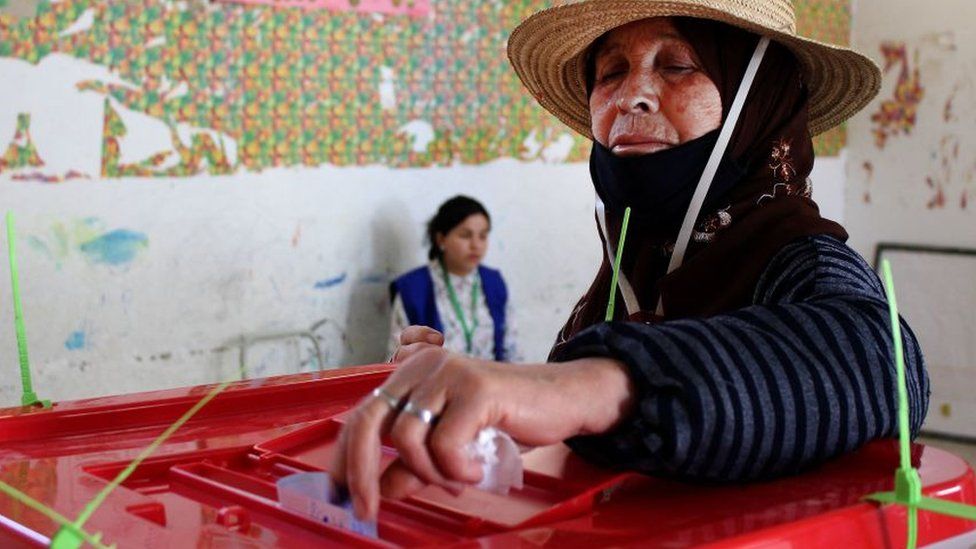 Image source, AFP
Analysts are watching to see how big the turnout will be
Polls have now closed in Tunisia's referendum on a controversial new constitution, with initial results expected to be announced within days.
President Kais Saied said the vote was necessary to advance political reforms.
But his opponents say it would entrench the powers he seized a year ago to strengthen his personal rule.
Tunisia became the birthplace of the Arab Spring when it overthrew its long-serving ruler Zine al-Abidine Ben Ali in 2011.
The date of the referendum was chosen by President Saied to mark a year to the day since his dramatic move to suspend parliament and dismiss the government.
Since then, he has effectively ruled by decree.
The new constitution, which replaces one drafted in 2014 three years after the Arab Spring, would give the head of state full executive control, supreme command of the army and the ability to appoint a government without parliamentary approval.
Mr Saied says it is needed to break a cycle of political paralysis and economic decay.
He says his reforms are being done in the spirit of the 2011 revolution and will ensure a better future.
"Our money and our wealth are enormous, and our will is even greater, to rebuild a new Tunisia and a new republic, one that breaks with the past," the president said after voting on Monday morning.
His many critics say it could lead Tunisia back to dictatorship in all but name.
The major parties - including the Islamist Ennahda - were boycotting the vote.
Although President Saied still has a core of support among Tunisians who believe the country needs a strong leader to address its problems, there seems little enthusiasm for the referendum.
Additional reporting by Leo Sands.
Tunisia referendum: A nation divided








 English (United States) ·
  French (France) ·